Self and performance
Originally at https://notes.shaunagm.net/post/137973439322/self-and-performance
When David Bowie died two weeks ago, I felt sad, but it was nothing compared to the outpouring of grief and remembrance from friends and from the culture at large. I have always liked Bowie’s music, his style, his interviews, the characters he’s played in movies. But I never quite got Bowie.
This tribute piece helped me realize why:
The sickness of my generation is a zealous attachment to “authenticity.” It is stultifying, oppressive, maybe even deadly, and premised on false assumptions about the nature of personal identity. Bowie is the antidote. He taught that persona is performance […] Bowie is why I tell my writing students that there is no “voice” to find, no voice that belongs to the true you, because there is no true you, only ever versions of yourself you have learned to perform, and the voice of the character you play on the page is up to you. The question is not who you are but what connects, how much courage you have, how much guile, what you can manage to get away with.
I come to identity from a completely different direction. The way I see it, the world is vast and changeable, full of complicated and dysfunctional systems, beautiful and terrible people, unanswered and unanswerable questions. One needs a sturdy sense of self just to keep moving.
But of course we are always performing - flirting, negotiating, code-switching, playing the devil’s advocate, trimming our beards and shaving our legs, forcing a laugh at things we don’t find funny, censoring ourselves in front of children, keeping our head down when the police are around, the list is endless. To resist the idea of performance is itself a privilege, in two ways. First, it means that luck and socialization have led us to prefer the behaviors which society most expects from us. And second, it means we do not fear punishment for unexpected behaviors.“This is who I am, take me or leave me!” is a statement of power.
I am, generally speaking, quite privileged and so it’s only in the last few years that I’ve been made to grapple with performed identity. A major contributor has been starting my own consulting business. I would greatly prefer to “let my work speak for itself” but instead I have had to create a public image, to promote myself with blurbs and bios and cover letters, to fake confidence and project competence and to inhabit the particular archetype known as the ‘woman in tech’.
There’s a tension there, a stretched-out sense of falseness, when one performs so consciously and yet clings to the idea of the authentic self.
It would be far easier to admit the performance. If only I could start every project proposal with “Hello, I am Shauna, and I am pretending to be a businesswoman!” Acknowledged performance is freeing, it is play, art, satire. Unacknowledged performance is constricting, oppressive. It is a mask we can’t take off even though our cheeks are chafing and our skin is sweaty.
Wilkinson, who I quoted above, would say there is no one beneath the mask:
there is no “voice” to find, no voice that belongs to the true you, because there is no true you, only ever versions of yourself you have learned to perform
I don’t believe this at all. The best metaphor I have for the self is a series of data points. There are an infinite number of equations I can fit to my data points - an infinite number of performances that are true to my self. But there are many more equations that simply don’t fit.
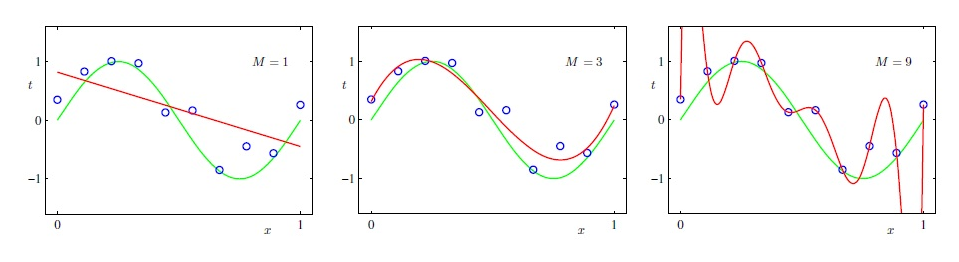
Some people pick the simplest equation that does fit and stick with it, adjusting only when new data comes into conflict. Others are constantly trying new equations, even complicated and confusing ones. David Bowie was a virtuoso at trying new equations.
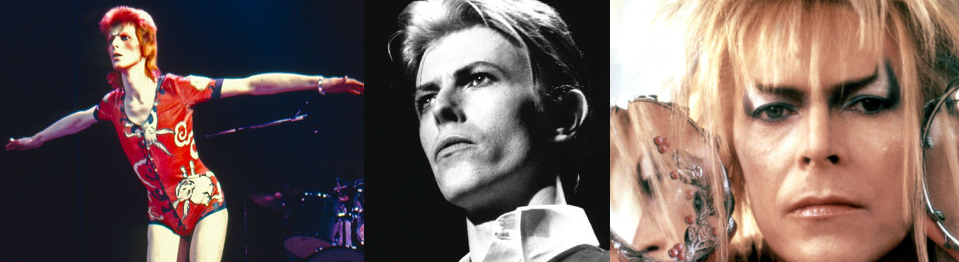
For many people, it is painful when someone confuses the equation with the data, the performance with the self. But that’s also inevitable. We never directly observe the self of others, only their performances. We see the equations, not the data, and that means we cannot tell what’s essential from what’s just a lark, an experiment, or a concession.
(To use a disquieting example of another virtuoso performer, I cannot tell whether Donald Trump genuinely believes that people ought to be frightened of Muslims, or whether he merely thinks that fear of Muslims is a useful campaign tool. But I can tell that ‘tolerance of difference’ is not part of his essential self, which is all I need to oppose him politically.)
The idea of an “essential self” is so abstract as to be nearly meaningless, but I know I’m not alone in finding it a vital concept.
I used to think that performance was dishonest, inauthentic. Now I think that all performance is an authentic variation on the essential self.
I use to think that performance meant shrugging off responsibility for my actions. After all, if I’m not being my essential self, it’s not really me hurting people. But we are always responsible for everything we do, even if we are not held responsible by others.
Some might say I am coming to an appreciation of Bowie too late - waiting until after his death to be influenced by him in a profound way. But it remains easy enough for me to access the only thing Bowie fans have ever had access to: his gorgeous and variegated performances. There was never any chance for me to know his essential self. That was his and his alone.