11 Things I Learned About At Transparency Camp
Originally at http://www.shaunagm.net/blog/2012/04/11-things-i-learned-about-at-transparency-camp/
I just spent the last two days at Transparency Camp. My capacity for coherent thought is pretty much used up after all the talks and sessions, and I want to save what small amount is left for the hackathon tomorrow. So here’s a list of some neat things I learned about, and I’ll save the insightful analysis for later.
Developed in Porto Alegre, Brazil, this process allows community members to decide how to spend a portion of the budget. Since 2009, Chicago Alderman Joe Moore has been doing this with his ward, and as of just a week ago, Vallejo, California will be doing participatory budgeting as well.
Matthew Cardinale told the story of how he sued the city of Atlanta for violation of the state’s open meeting law. Warned by every lawyer he approached that his activism was futile, he argued as a pro se litigant all the way up to the state supreme court, where he won. In their decision, they made clear that the default state of government in Georgia is openness.
An API for a new algorithm which finds overlap between large blocks of text, well, super fast. Why is this good for transparency advocates? It can help detect when journalists are regurgitating press releases, for one. It can also uncover when legislators use “model bills” given to them by think tanks, as was the case with some of the recent ultrasound bills and the ALEC-backed Stand Your Ground laws.
A project of Transparencia Hacker, a Brazilian open government group, this bus travels around hosting transparency awareness events and arranging meetings between local hackers and government authorities.
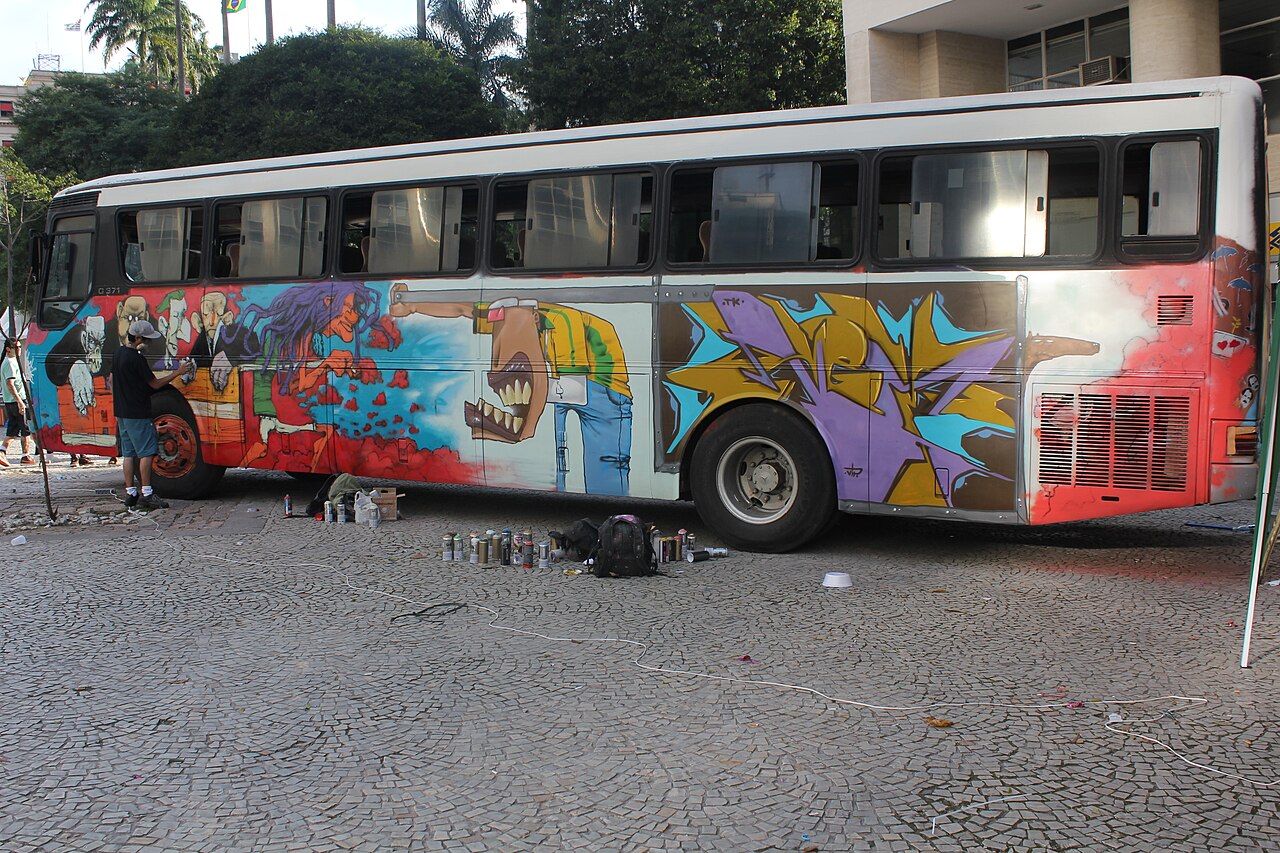
Photo: Ônibus Hacker by Fabricio Campos Zuardi, CC BY 3.0.

Where you can find some truly disheartening reports, such as: “The top five recipients of $3.7 billion in federal corporate tax breaks paid $0 in 2009 federal taxes and enjoyed a combined profit of $77.16 billion in 2010. This report reveals that these corporations also gave $78.7 million to state political campaigns and $45.3 million to federal campaigns in the last decade.”
6. Lots of funny t-shirts
This one was my favorite:

7. The Plain Writing Act of 2010
A perfect example of the difference between availability and accessibility. If you’re not already convinced we needed this, take a look at the example on the wikipedia page linked above.
8. France’s Literal Underground of Hacker-Artists
I forget what this has to do with transparency, but it’s still pretty cool. From the liked article: “This stealthy undertaking was not an act of robbery or espionage but rather a crucial operation in what would become an association called UX, for “Urban eXperiment.” UX is sort of like an artist’s collective, but far from being avant-garde---confronting audiences by pushing the boundaries of the new---its only audience is itself. More surprising still, its work is often radically conservative, intemperate in its devotion to the old. Through meticulous infiltration, UX members have carried out shocking acts of cultural preservation and repair.”
9. Politwoops
An API of tweets deleted by politicians.
10. Programming Metaphors
Unit-testing and system-testing legislation. That is, documenting the stated purpose of legislation on a modular and holistic level and evaluating whether it “passes”. Related, Gitlaw: using git (or git-like) version control systems to help track/comprehend incremental changes to legislation. (I feel like maybe this would only be helpful to programmers, and just confuse everyone else more - but I’d like to see it done.)
11. Citizen Science
Okay, I already knew about most of the projects mentioned in this session but I was still glad to talk about them! I see a lot of overlap in the open science and open government movement, and not just in the names. ;) And I did learn about a couple new projects: Be a Martian and Leaf Snap.
That’s not nearly all, but I’ll stop there for now.